

Sustainability in construction is often discussed in broad, aspirational terms, carbon reduction targets, net zero commitments and environmental responsibility. However, housebuilders and manufacturers achieve sustainability through practical, measurable actions taken every day.
Timber engineering plays a central role in this process. When manufacturers combine it with efficient production methods and on-site systems such as biomass energy, it becomes a highly effective way to reduce environmental impact.
At Nuneaton Roof Truss (NRT), sustainability forms part of daily operations. The team integrates it directly into product design, manufacturing processes and delivery planning.
Why Timber Engineering Supports Sustainable Construction
Timber stands out as one of the most sustainable structural materials available.
Renewable Resource
Forestry organisations manage timber carefully by replanting and maintaining long-term woodland cycles. As a result, timber remains a renewable resource when sourced responsibly.
Carbon Storage
Timber actively stores carbon throughout its lifecycle. This means it helps offset emissions generated elsewhere in the construction process.
Lower Embodied Energy
Manufacturers require less energy to produce engineered timber compared to materials such as steel or concrete. Consequently, timber contributes to a lower overall environmental footprint.
The Role of Efficient Manufacturing
While timber itself offers strong sustainability credentials, the way manufacturers process and use it also plays a critical role.

Modern timber engineering focuses on:
- Precision cutting
- Material optimisation
- Minimising waste
At Nuneaton Roof Truss, products such as roof trusses and posi-joists are manufactured to exact specifications using advanced design software. This ensures:
- Minimal excess material
- Accurate production
- Reduced need for on-site adjustments
However, even with efficient manufacturing, some level of timber waste is unavoidable. This is where NRT’s biomass boiler plays a crucial role.
NRT’s Biomass Boiler: Turning Waste Into Energy
One of the most practical examples of sustainability in action at NRT is the use of two Froling T4e wood chip boilers, accompanied by a Viessmann Vitoligno 250-S wood gasification boiler.
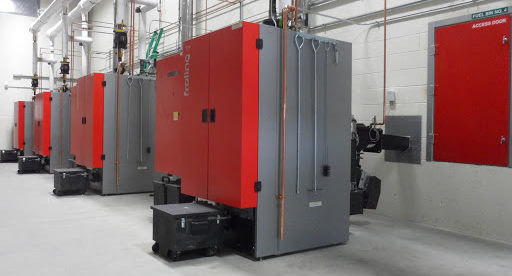
Rather than sending surplus timber offcuts and waste materials to landfill, this system allows NRT to convert waste timber into usable energy
How the Biomass System Works
During the manufacturing process, timber offcuts are collected and processed into fuel suitable for the biomass boiler.
This fuel is then used to generate heat energy, which supports:
- Heating within the manufacturing facility
- Energy demands linked to production processes
This creates a closed-loop approach, where waste generated on-site is reused productively.

Environmental Benefits
The biomass boiler contributes directly to reducing environmental impact in several ways:
1. Reduced Landfill Waste
Timber waste that would otherwise be discarded is reused as fuel.
2. Lower Reliance on Fossil Fuels
By generating energy from biomass, the need for traditional energy sources is reduced.
3. Improved Overall Efficiency
Resources are used more effectively, supporting a more sustainable manufacturing operation.
Operational Benefits
Beyond environmental gains, the biomass system also supports operational efficiency:
- Reduces waste disposal costs
- Supports energy independence
- Improves overall resource management
This aligns sustainability with practical business benefits, something that is increasingly important across the construction industry.

Sustainability Beyond Materials
It’s easy to focus solely on the materials used in construction, but sustainability is equally influenced by how systems are delivered.
Offsite manufacturing, for example, contributes to sustainability by:
- Reducing site waste
- Minimising transport inefficiencies
- Improving material accuracy
Similarly, engineered products such as:
- Roof trusses
- Posi-joists
- Spandrel panels
help ensure that materials are used efficiently and consistently across developments.
The Importance of Practical Sustainability
For house builders, sustainability needs to work in practice, not just in theory.
That means:
- Reliable supply chains
- Efficient installation
- Measurable environmental benefits
Timber engineering supports all these requirements when combined with:
- Effective manufacturing processes
- Responsible material sourcing
- Initiatives such as biomass energy systems
Sustainability Built Into Everyday Operations
Sustainable construction isn’t driven by one solution—it’s the result of consistent, practical decisions across the entire process.
At Nuneaton Roof Truss, that includes efficient manufacturing, responsible material use, and systems like the on-site biomass boiler that ensure timber waste is reused productively.
Comments are closed.