
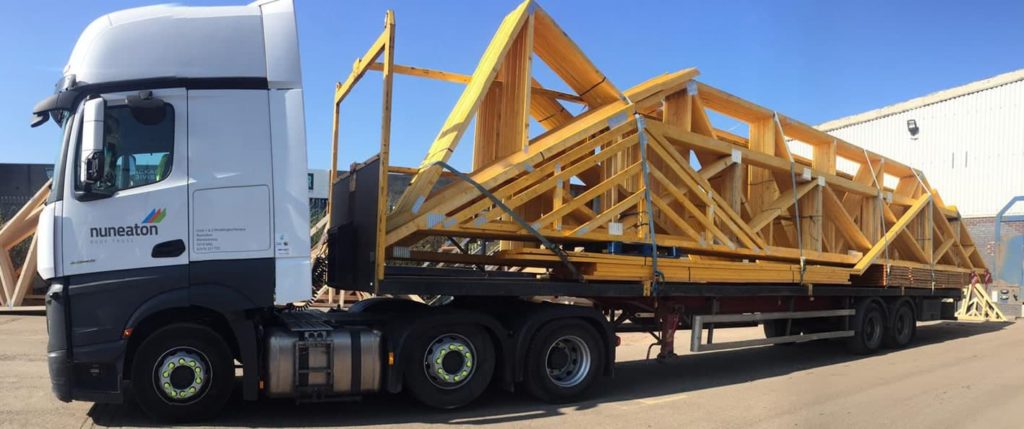
Every roof truss installed on a construction site starts its journey long before it reaches the build. Although it often becomes hidden once the roof is complete, the process behind it plays a critical role in ensuring structural performance and build efficiency.
For housebuilders, understanding the roof truss manufacturing process helps explain how accuracy, consistency and programme reliability are achieved.
At Nuneaton Roof Truss, the team has refined this process over years of experience to support reliable and repeatable outcomes across a wide range of developments.
Stage 1: Initial Design and Structural Modelling
The journey begins with detailed design work based on architectural drawings.
At this stage, the design team reviews:
- Roof shape and pitch
- Span requirements
- Structural loads
- Overall building layout
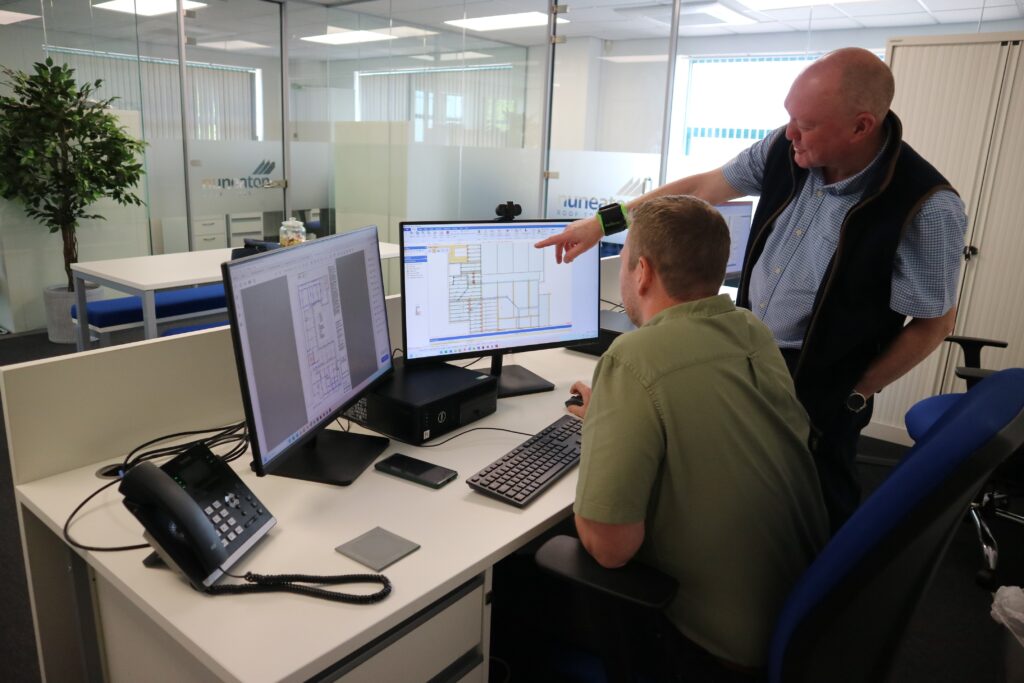
Using specialist MiTek software, designers then create a precise structural model of the roof truss system..
What Happens at This Stage
During this process, engineers:
- Carry out structural calculations
- Analyse load paths
- Select appropriate truss configurations
- Specify materials
Because this stage sets the foundation for everything that follows, accuracy is essential. If teams overlook key details here, issues can arise later in the project.
Why Early Design Matters
When developers engage early, they can:
- Improve coordination with the overall build
- Align the truss system with other structural elements
- Identify potential challenges in advance
As a result, early design input helps prevent delays further down the line.
Stage 2: Production Planning and Preparation
Once the design is approved, the project moves into production planning.
At this point, the team:
- Schedules manufacturing
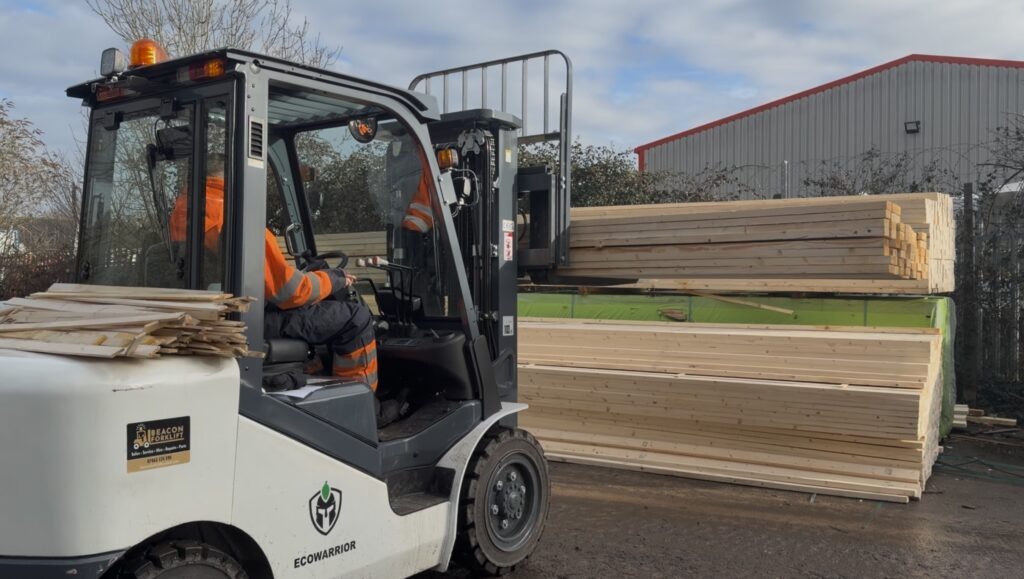
- Allocates materials
- Prepares detailed cutting lists
This stage ensures that everything required for production is in place before manufacturing begins.
Material Preparation
The team selects timber based on:
- Strength grading
- Structural requirements
- Design specifications
By preparing materials carefully, manufacturers ensure that the production process runs smoothly and consistently.
Stage 3: Precision Manufacturing
At this stage, the design becomes a physical product.
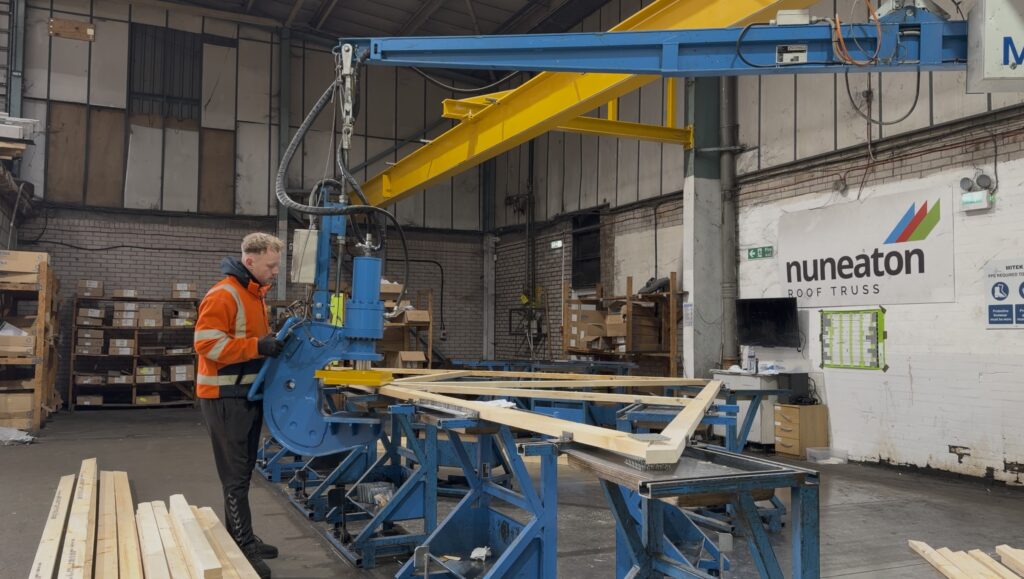
Using automated cutting machinery, operatives:
- Cut timber to exact dimensions
- Assemble components
- Position steel connector plates
This creates the finished truss in line with the approved design.
Why Precision Matters
Because roof trusses are engineered systems, small inaccuracies can quickly cause problems. For example, incorrect dimensions can lead to:
- Misalignment during installation
- Delays on site
- Additional adjustments
However, controlled factory manufacturing significantly reduces these risks.
Efficiency at Scale
For large housing developments, manufacturing must deliver:
- Consistent quality
- High volumes
- Reliable turnaround times
This is where experienced manufacturers make a difference.
Stage 4: Quality Control and Inspection
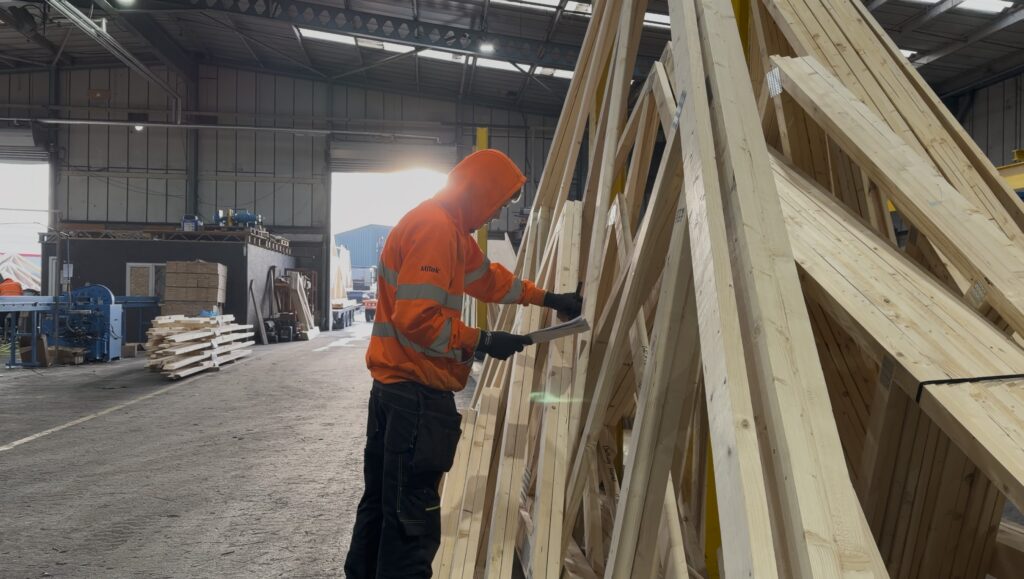
Before any truss leaves the factory, it goes through a rigorous quality control process.
This typically includes checks for:
- Dimensional accuracy
- Correct assembly
- Plate positioning
- Overall structural integrity
Why This Stage Is Critical
Quality control ensures that:
- The product meets design requirements
- Installation on site is straightforward
- Risks of rework are minimised
It is the final safeguard before delivery.
Stage 5: Delivery and Site Coordination
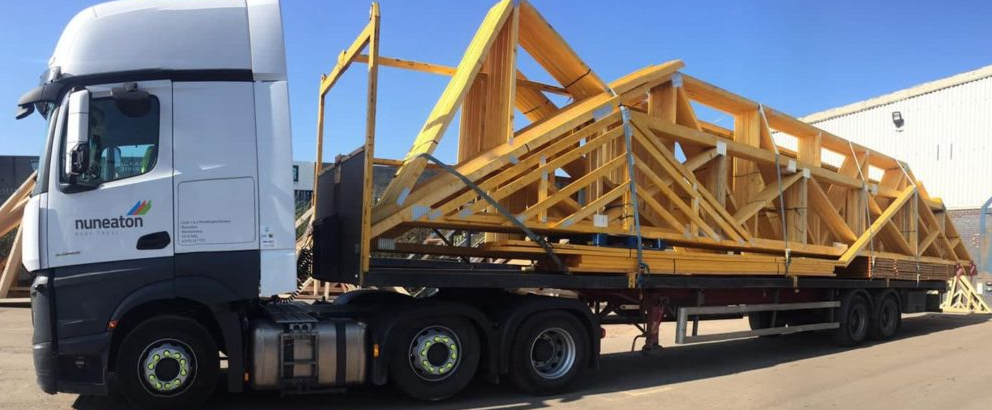
Once complete, trusses are prepared for delivery to the site.
This stage involves:
- Careful loading and handling
- Sequencing deliveries based on site needs
- Coordinating with contractors
The Importance of Timing
Even perfectly manufactured trusses can cause issues if:
- Delivered too early (storage challenges)
- Delivered too late (programme delays)
Reliable scheduling is just as important as manufacturing accuracy.
Stage 6: Installation on Site
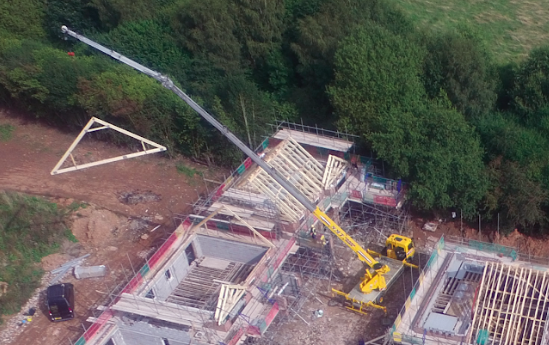
On delivery, trusses are installed using cranes or lifting equipment.
Because they are pre-engineered:
- Installation is quick
- Minimal on-site adjustments are needed
- Build programmes can be maintained
Installation Benefits
- Reduced labour requirements
- Faster roof construction
- Improved safety compared to traditional methods
How the Process Supports Modern Housebuilding
The entire roof truss manufacturing process is designed to support:
- Efficiency
- Predictability
- Consistency
It removes much of the variability associated with traditional on-site construction.
A Process Designed for Consistency
From initial drawings through to delivery on site, each stage of the roof truss process plays a role in achieving reliable outcomes.
At Nuneaton Roof Truss, this process is carefully managed to ensure that every truss arrives ready to support efficient installation and consistent build quality.
Comments are closed.