

Engineered timber quality depends on consistent decisions at every stage. Accurate machinery matters, but it cannot carry the whole process. We also need controlled drawings, suitable materials, trained people, routine checks and records that connect the finished component with the approved design.
Engineered timber quality begins with information
Production teams need one clear source of truth. Approved drawings and design files define the components, dimensions, timber members and connector plates required for the package.
Document control helps teams use the correct revision. It also makes changes visible. When a customer alters the building after approval, the manufacturer can review the effect rather than allowing an informal instruction to reach the factory floor.
Nuneaton Roof Truss uses specialist MiTek and Pamir design software within its roof and floor workflow. Digital files transfer production information to cutting equipment, reducing unnecessary paperwork and supporting accuracy. Our manufacturing page provides an overview of the process.
Materials need identification and control
An engineered component can only perform as designed when the materials match the specification. Timber strength, dimensions and condition all matter. Connector plates and associated metalwork also need to suit the approved design.
Manufacturers therefore need clear purchasing, receipt and stock processes. They should protect timber during storage and keep unsuitable material away from production. Traceability records can also support responsible sourcing claims.
We hold PEFC chain-of-custody certification, and our BM TRADA certification information is available on the our accreditations page. PEFC explains how chain of custody tracks certified forest-based material through the supply chain on the PEFC UK website.
Skilled people remain central
Automated cutting and specialist presses improve consistency, yet skilled people still set up, operate and check the process. Designers review the structure. Production teams read work information, position members and inspect assemblies. Dispatch teams identify and prepare the right package.
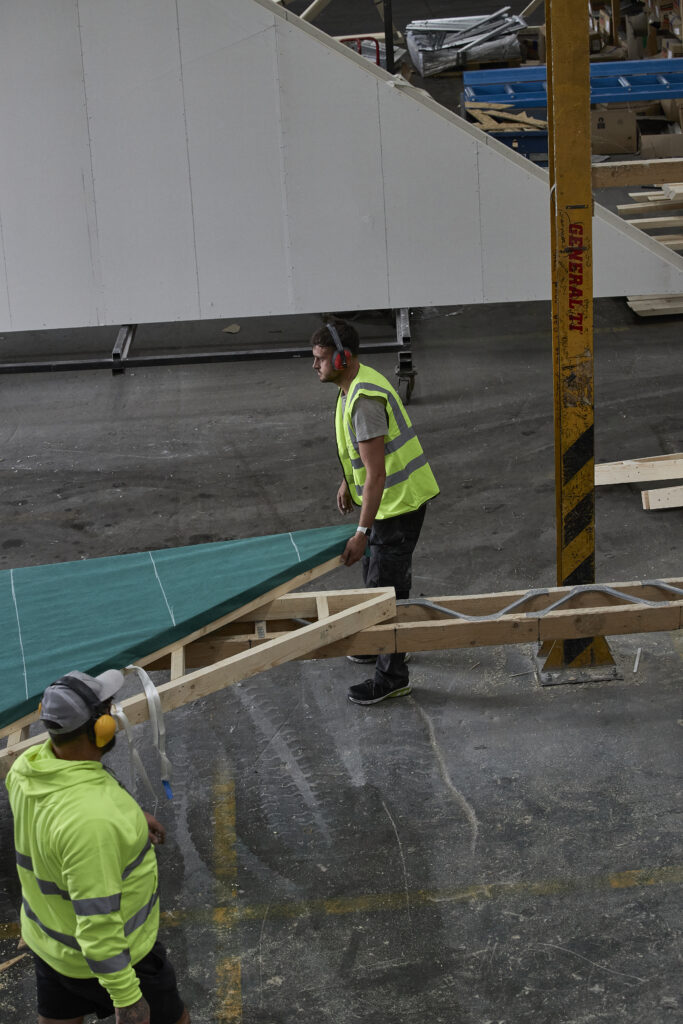
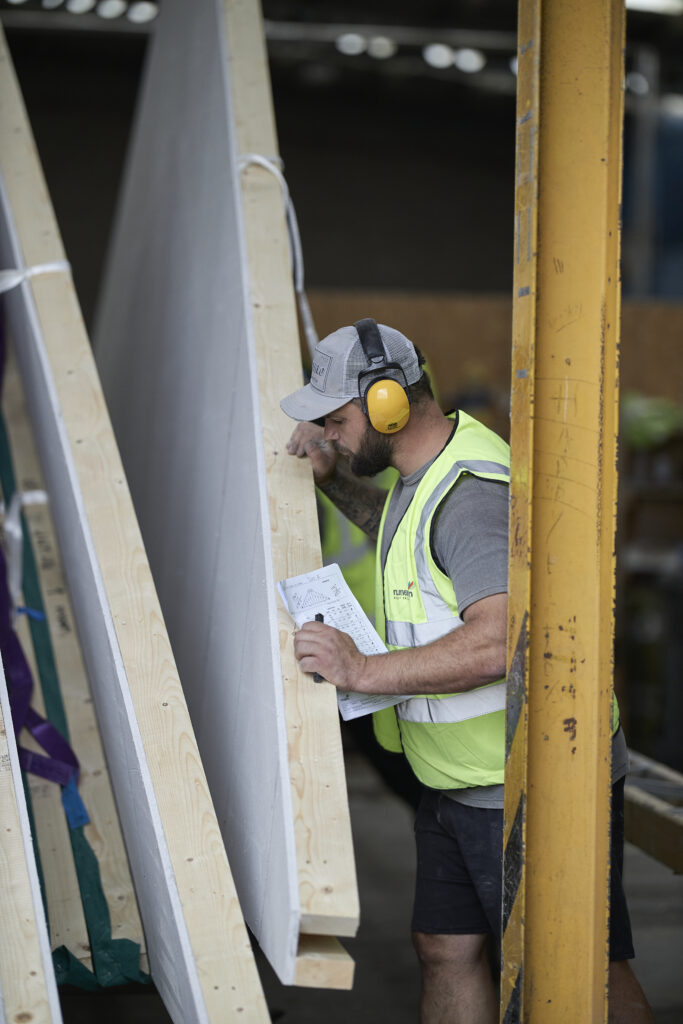
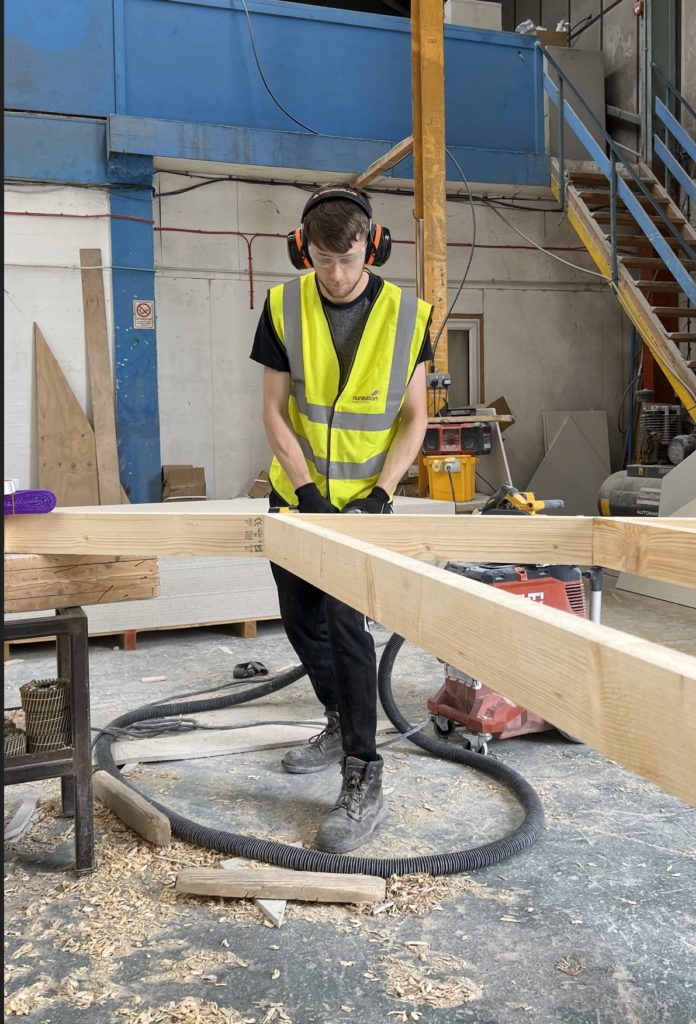
Training should cover the task, equipment, safety and quality expectations. It should also help employees recognise when something does not look right. A strong quality culture gives people permission to stop, check and raise a concern.
Checks should follow the risk
Quality control works best when checks appear at useful stages. Waiting until dispatch to inspect everything can make a problem harder to correct.
Useful controls may include:
- design and revision checks before release;
- timber and connector verification;
- cutting dimensions and angles;
- jig set-up and component orientation;
- plate position and embedment;
- identification and package checks;
- final loading checks against the delivery schedule.
The exact system should match the manufacturer’s certified processes and the product being made.
ISO 9001 supports a process-based approach
We manufacture our trusses to a consistent quality to meet its ISO 9001 standard. ISO 9001 focuses on a quality management system rather than endorsing one individual component. It encourages organisations to define processes, monitor performance, manage nonconformities and improve.
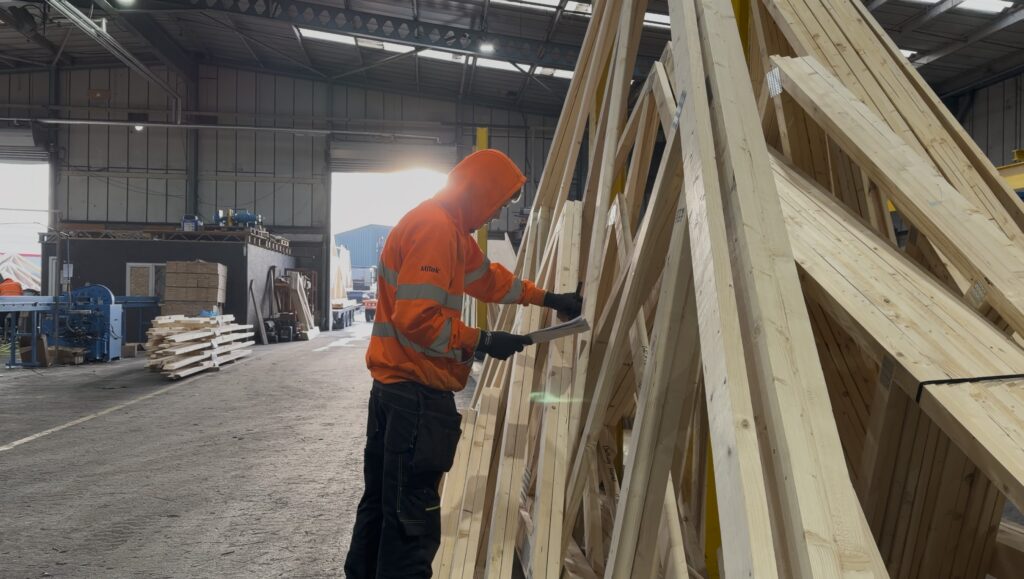
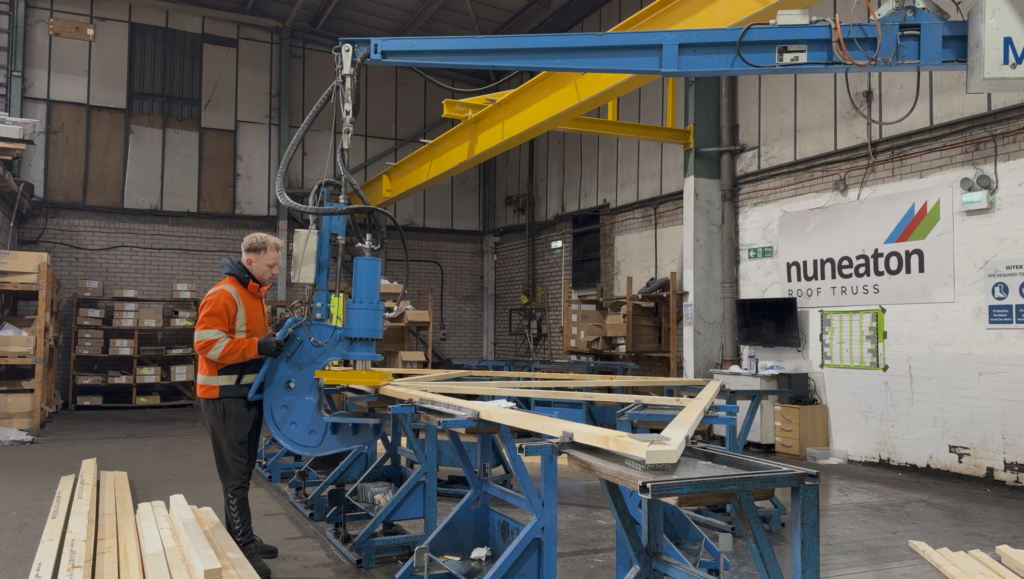
For customers, the important point is practical. A quality system should make responsibilities clearer, records easier to follow and repeated work more consistent. Certification does not remove the need for project-specific design or correct installation, but it can support confidence in the manufacturer’s controls.
Nonconformities should create learning
No process improves by hiding problems. When a discrepancy appears, the team should identify it, contain affected work, establish the cause and record the action taken.
Recurring themes may point to unclear information, training needs, equipment maintenance or a process gap. Reviewing that data turns one correction into wider improvement.
The same approach applies to customer feedback. A useful report includes the order, plot, component reference, photographs and dimensions. Specific information helps the manufacturer investigate and respond.
Quality continues after dispatch
The factory controls the component until loading. Site teams then need to unload, store and install the package in line with the supplied information. Damage, unapproved cutting or incorrect positioning can undermine controlled manufacture.
Clear site packs, component labels and technical contacts help bridge this handover. Customers should report concerns before installation and keep approvals for any repair or change.
Audits support everyday discipline
Internal checks and external audits give us opportunities to test whether documented processes match everyday practice. An audit may review records, responsibilities, training, calibration or corrective actions. Its value lies in the questions it prompts and the evidence it examines.
We do not treat an audit as a one-day performance. Our controls need to work when the factory is busy, when a new colleague joins and when a project changes. Regular review helps us identify where instructions could be clearer or where a record could be more useful.
Maintenance and calibration protect accuracy
Equipment needs planned attention if it is to support repeatable output. We maintain machinery in line with our operating requirements and check measuring or production controls at appropriate intervals. Operators also monitor equipment during normal use and report unusual results.
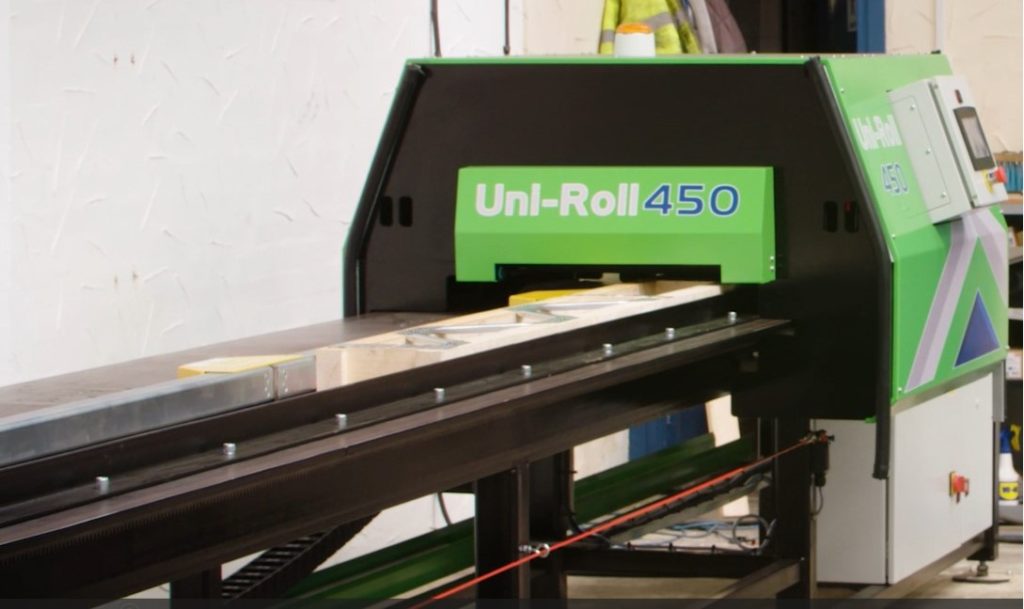
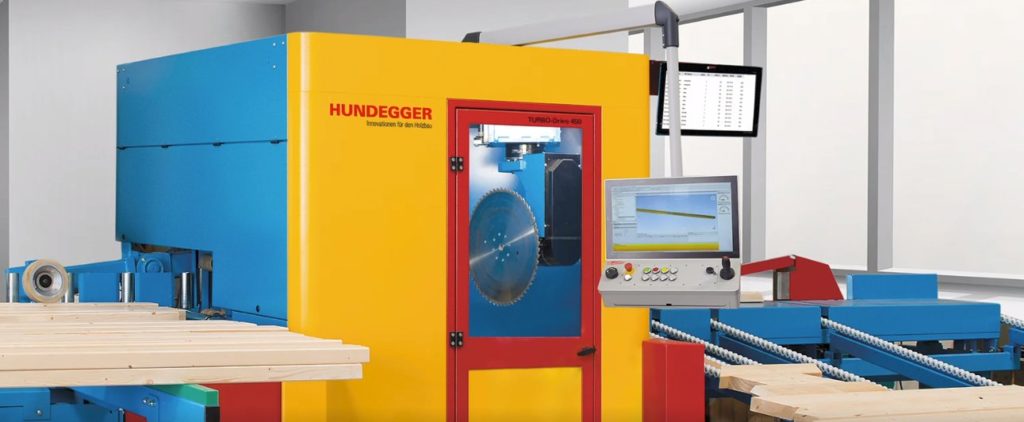
Maintenance links quality with safety and productivity. Addressing wear or inconsistency before it causes a defect protects material, time and customer confidence. Records also help us see patterns rather than treating each event in isolation.
Supplier quality enters our process
Our quality responsibilities begin before timber reaches our factory. We need suitable material, dependable documentation and suppliers who can meet the relevant requirements. Receipt checks provide a point to confirm identity, condition and paperwork before stock enters production.
Where a material does not meet expectations, segregation prevents accidental use while we investigate. Clear supplier feedback can then support corrective action and future purchasing decisions. This approach connects incoming quality with the finished engineered component.
Make quality part of every handover
Engineered timber quality grows from connected controls, not one final inspection. Reliable information, suitable materials, capable people and useful records all contribute. Learn more about our services or call 02476 327722 to discuss an upcoming project.
Comments are closed.