

Roof truss handling and storage deserve the same planning as lifting and installation. Trusses arrive as engineered components, ready to perform a defined structural role. Poor support, careless movement or long exposure to site conditions can damage members, distort the bundle and make erection harder than it needs to be.
Plan roof truss handling and storage before delivery
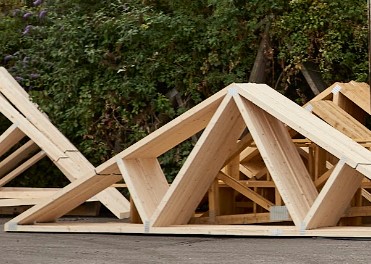
Choose a firm, level storage area before the vehicle arrives. Keep it away from moving plant, excavations and places where other trades may stack materials against the trusses. Confirm how the delivery vehicle will enter, turn and leave, and agree a safe unloading method with the supplier.
The delivery sequence should support the build programme. If trusses arrive far earlier than installation, the site accepts a longer storage risk. If they arrive without space or lifting resources, unloading becomes inefficient. A simple logistics conversation can prevent both outcomes.
Support trusses correctly
Store trusses in a stable position and support them at appropriate points so members do not carry unintended loads. Keep bundles clear of the ground to reduce contact with standing water, mud and debris. Do not use a single narrow support that can create local distortion.
Trusses vary in size and shape, so follow the project-specific supplier information. Keep identification labels visible where practical. That helps the team locate the correct truss reference without repeatedly moving the entire stack.
Keep weather protection ventilated
Timber products should be protected from prolonged wetting, yet wrapping them into an unventilated package can trap moisture. Use a weather-resistant cover that sheds rain while allowing air circulation. Check the cover after high winds and inspect the storage area after heavy weather.
Short-term site exposure does not justify ignoring moisture. If components become saturated, damaged or visibly distorted, stop and ask the supplier or responsible designer for advice. Do not improvise a structural repair.

Move engineered components with care
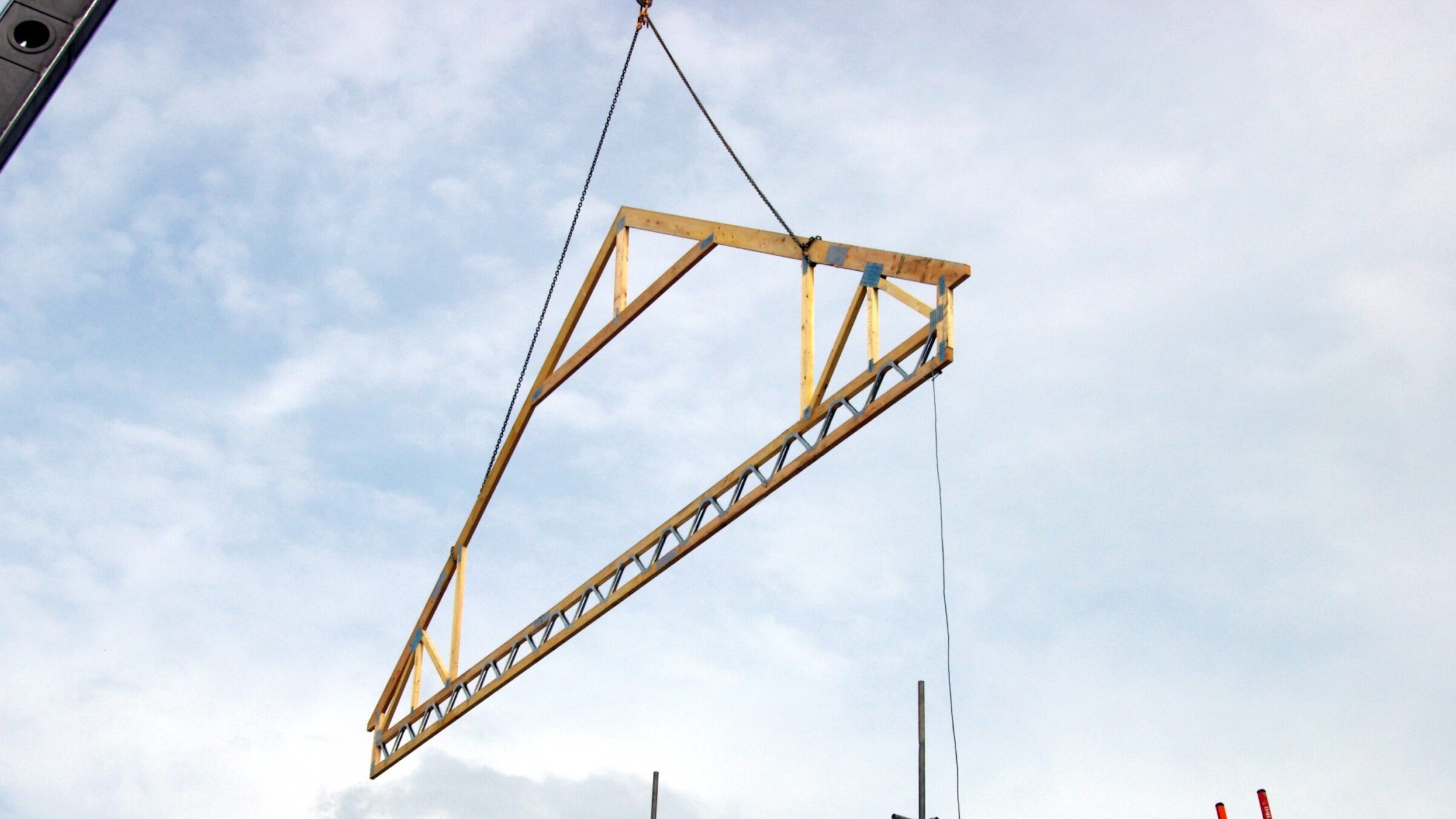
Use suitable lifting equipment and follow the lifting plan. Avoid dragging trusses across the ground or lifting them from a point that causes excessive bending. Tag lines and controlled exclusion zones can help the team manage movement, subject to the site’s method statement.
Never cut, notch or drill a truss to make it fit. Each member and connector forms part of an engineered system. If an obstruction or dimensional conflict appears, record it and request a checked solution.
Prepare for efficient installation
Before erection, compare delivered references with the approved layout and confirm that supports are ready. Ensure temporary restraint and bracing materials are available. Brief the installation team on the sequence, lifting method and any special trusses such as girders, hips or valleys.
Good preparation limits the time that individual trusses remain unstable. Permanent bracing and restraint must follow the approved design and relevant installation guidance. Site teams should use the information supplied for the project rather than relying on memory from a different roof.
Use our health and safety information, alongside project-specific installation information.
Inspect Deliveries Consistently
Check the delivery against the order and look for visible damage before components enter the installation sequence. Record concerns promptly with photographs and truss references. Pay attention to split timber, damaged connector areas, distortion and marks caused by straps or lifting equipment.
A visible issue does not always make a component unusable, but the site team should not decide informally. Quarantine the affected item where necessary and obtain written guidance from the supplier or responsible designer. Keep delivery paperwork and any agreed remedial detail with the plot records.
Keep Storage Under Review
Site conditions change. A storage location that worked on delivery day may later sit beside scaffolding changes, drainage work or heavy traffic. Include stored trusses in routine inspections and move them only through a planned method. Check supports, covers, labels and stack stability.
If the programme slips, review the protection arrangements. Brief plant operators and other trades that trusses are engineered products, not supports for unrelated loads. Clear ownership of the storage area helps prevent accidental contact and unapproved movement.
Protect the Product and the Programme
Careful roof truss handling and storage preserves manufactured quality and supports a safer, smoother installation. Plan the delivery area, support and cover the components correctly, and refer any damage or design conflict to a competent person. Nuneaton Roof Truss can help customers coordinate quotation, manufacture and delivery around the project programme.